
Home » Dental Crown Prices in Sopron
Considering a dental crown in Sopron? Discover 2026 pricing, crown types, materials, warranties, and financing options for quality tooth restoration.
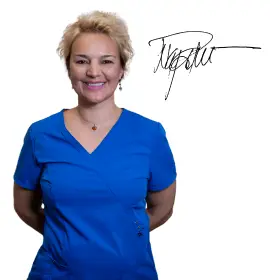
Implantology und All-on-4 Specialist
Table of Content
1. What is a Dental Crown and What is it Used For?
2. What Types of Dental Crowns Are There?
3. How Much Does a Dental Crown Cost in Sopron?
4. What Influences the Price of a Dental Crown?
5. What is the Difference Between Metal, Porcelain, and Zirconia Crowns?
6. What Material Crown is Recommended for Front/Back Teeth?
7. How Long Does it Take to Make a Crown?
8. Is There a Warranty on Crowns?
9. Frequently Asked Questions About Dental Crowns
Specifically curious about zirconia crown prices? Take a look at our zirconia crown price list.

Looking to get a dental crown in Sopron but want to know what to expect in terms of price and quality? You’ve come to the right place! Dental crowns are one of the most common tooth restoration solutions that not only restore tooth function but also provide perfect aesthetic results. Sopron offers a wide selection in both materials and prices – from traditional metal crowns to the most modern zirconia solutions. In this guide, you’ll learn everything about crown prices in Sopron, different types, and how to find the most suitable solution for you with the best value for money.
A dental crown is a cap-like tooth restoration that completely covers and surrounds a damaged or weakened tooth, restoring its original shape, size, and function. The crown is essentially an artificial “cap” that the dentist secures onto the filed-down natural tooth or implant, thereby protecting and strengthening it.
Dental crowns are used in numerous cases: restoring heavily decayed or fractured teeth when fillings no longer provide adequate support; protecting root-canal-treated teeth that have become brittle; covering discolored or aesthetically unsatisfactory teeth; serving as anchors for bridges; replacing missing teeth when placed on implants; or restoring the height of severely worn teeth. The crown essentially gives new life to a damaged tooth, allowing it to remain functionally and aesthetically perfect for decades.
Dental crowns can be categorized according to several criteria: material, manufacturing technology, and intended use. The most important material-based types are: metal crowns (gold, chrome-cobalt alloys) – the most durable but aesthetically less favorable; porcelain-fused-to-metal (PFM) crowns – ceramic layer baked onto a metal base, a good compromise; all-ceramic/porcelain crowns – completely metal-free with excellent aesthetics; and zirconia crowns – the most modern solution, extremely durable and aesthetic.
Based on manufacturing technology, we distinguish traditional impression-based crowns made in dental laboratories and digital (CAD/CAM) crowns designed by computer and milled, sometimes in just one day. According to intended use, there are full crowns that completely cover the tooth; partial crowns (onlay, inlay) covering only part of the tooth; temporary crowns protecting until the permanent one is ready; and implant crowns placed on artificial roots. All types are available in Sopron, with the choice depending on individual needs, the position of the affected tooth, and of course, budget.
Dental crown prices in Sopron vary widely depending on the material and manufacturing technology.
| Metal-ceramic crown price | Price in Sopron (€) |
| Crown (with 3-year warranty) | 300,- EUR |
| Implant crown | 300,- EUR |
| Implant crown (screw-retained) | 300,- EUR |
| Bridge (3-piece) | 900,- EUR |
– Tooth preparation. | |
Ceramic crown / piece | Price in Sopron (€) |
| Crown – all ceramic | 400,- EUR |
| Implant crown – all ceramic | 400,- EUR |
| Implant crown (screw-retained) – all ceramic | 400,- EUR |
| Bridge (3-piece, all ceramic) | 1.200,- EUR |
Zirconia crown price | Price in Sopron (€) |
| Zirconia crown | 400,- EUR / Piece |
| Zirconia implant crown | 400,- EUR / Piece |
| Zirconia implant crown (screwed) | 400,- EUR / Piece |
| Bridge (3-piece zirconia) | 1.200,- EUR / Piece |
| -Complete health check. -Taking of the impression. -Fabrication of a complete set of dentures in the dental laboratory. -Setup of the perfect bite. | |
It’s important to know that these prices typically include the examination, impression taking, temporary crown, and placement of the final crown. Additional costs may arise: root canal treatment if necessary; post/core build-up; X-rays; and possible surcharges for complicated cases.
The price of a crown is determined by numerous factors together, and understanding these helps in making the best decision. Material choice is the most decisive: metal is the cheapest, while premium zirconia is significantly more expensive but also more durable and aesthetic. The quality of the dental laboratory also matters – the work of experienced domestic labs is more expensive but more reliable than that of unknown foreign labs.
Manufacturing technology is also price-influencing: the traditional impression method is cheaper, while digitally designed and milled (CAD/CAM) crowns are faster but more expensive. The complexity of treatment plays a significant role – a simple case costs much less than when root canal treatment, core build-up, or gum treatment is needed beforehand.
The dentist’s expertise and experience is also reflected in the price: a professional with decades of practice, an oral surgeon, or prosthodontist charges higher fees than a newly graduated general dentist, but the expertise and quality of results often justify the price difference. The location and equipment of the practice also influences prices – practices with modern technology in central locations are generally more expensive. Finally, aesthetic expectations also count: a perfectly fitting, natural-looking crown requires more time and more precise work than a simple functional replacement.
There are significant differences between these three most common crown types in material, aesthetics, durability, and price. Metal crown (gold or chrome-cobalt alloy) is the most durable solution, virtually everlasting, provides excellent chewing surface, and can be the thinnest, thus requiring less tooth structure removal. Its disadvantage is aesthetic appearance – the metal is visible, so it’s only recommended for back teeth.
Porcelain-fused-to-metal (PFM) crown is a compromise solution: a metal framework inside provides strength, porcelain layer outside provides aesthetics. This was the standard solution for decades for both front and back teeth. Very good in terms of durability (15-20 years), aesthetically acceptable, though with gum recession over time, the grayish metal framework may become visible..
Zirconia crown is the most modern solution: made from zirconium dioxide ceramic, which is extremely hard (steel hardness) yet aesthetic. Completely metal-free, so no grayish shade is visible, perfectly mimics the translucency and shine of natural teeth. Biocompatible, doesn’t cause allergies. Excellent choice for both front and back teeth. Its durability is outstanding: 20-25+ years. Can be precisely made with digital technology.
Different requirements apply to front and back teeth, so the recommended crown types also differ. For front teeth (incisors, canines), aesthetics is the primary consideration, as these are visible when smiling. Best choices: all-ceramic crown – perfect aesthetics, natural translucency, zirconia crown – excellent aesthetics + durability, premium solution.
Acceptable: porcelain-fused-to-metal crown, but only if the gum line is high and stable, otherwise the metal framework may show later. To avoid: pure metal crown – aesthetically unacceptable for front teeth.
For back teeth (molars, premolars), function and durability are most important, as these perform the chewing work and are under great load. Best choices: zirconia crown – optimal durability + aesthetics if invisibility is important; metal crown (gold or alloy) – most durable, least tooth structure removal, if aesthetics don’t matter. Good alternative: porcelain-fused-to-metal crown – excellent compromise between price and quality.
Acceptable: all-ceramic, but less recommended due to high chewing forces unless it’s a reinforced version.
Special cases: If you grind your teeth, only choose zirconia or metal crowns for back teeth, porcelain can easily chip. When replacing multiple missing teeth with bridges, the anchor crowns should always be the strongest material (zirconia or metal). If the crown goes on an implant, zirconia is most commonly recommended for both front and back areas. Most dentists in our praxis we provide personalized recommendations, considering the patient’s bite, tooth condition, and budget.
The traditional crown preparation time is generally 2-3 weeks, but this depends on several factors. The standard process is as follows: Initial examination (day 1): condition assessment, treatment plan, possibly preliminary root canal treatment or tartar removal needed, this can be an additional 1-2 weeks. Tooth preparation and impression (1-2nd appointment): grinding down the tooth, taking precise impression, color determination, temporary crown placement – this is 1-1.5 hours. Laboratory fabrication: 10-14 working days while the dental technician makes the crown. Try-in (optional, 3rd appointment): in more complicated cases, an intermediate try-in to ensure perfect fit and color. Final placement (last appointment): removal of temporary, cementing the final crown, bite check – this is about 30-45 minutes.
Yes, most dental practices in Sopron provide warranty on crowns, though conditions may vary between practices. The standard warranty is generally 2-5 years, covering the crown’s integrity and retention. This means if the crown loosens, falls off, or breaks under normal use during this period, the dentist will repair or replace it free of charge or at minimal cost.
What the warranty typically includes:
What the warranty does NOT cover:
No, crown preparation is done under local anesthesia, so the tooth grinding and impression taking are completely painless - afterwards there may be mild sensitivity for 1-2 days, which can be easily managed with painkillers.
Yes, immediately after the final crown placement you can chew with it, and it must be cared for just like natural teeth - with regular brushing, flossing, and six-month dental check-ups.
Porcelain and zirconia crowns don't discolor, however the border between the crown and natural tooth can discolor with poor oral hygiene, and the natural teeth themselves may darken, which can make the crown stand out in contrast.
A well-made and maintained crown can last 15-25 years, but replacement may be necessary if it loosens, breaks, the underlying tooth deteriorates, or the gum recedes so much that it causes an aesthetic problem.
If the tooth root can still be saved, a crown is always the better and cheaper choice, but if the root is also bad or the tooth is missing, then an implant is necessary, which is a more durable long-term solution.
Fogászati rendelőnk 2002-ben alakult. Azóta számos All-on-4™ implantációs beavatkozást végeztünk középkorú és idősebb pácienseken. Alkalmazzuk azokat az innovatív megoldásokat, amelyeket tapasztalataink során szereztünk. Nemzetközi konferenciákon, képzéseken és workshopokon veszünk részt tudásunk naprakészen tartása érdekében.
Elkötelezettek vagyunk a fogászat iránt.
Szeretettel Várjuk Önt egy konzultációra!
Nándor és Carina.

Dr. Carina Nagyi-Panicz
Dentist, All-on-4, Implantology

Dr. Nándor Nagyi
Dentist, Prothetic


Közzétéve itt: GoogleA Trustindex hitelesíti, hogy a vélemény eredeti forrása Google. Valóban igaz amit a többiek írnak. Tényleg nagyon jó hely. Modern felszerelések, türelmesek és kedvesek. A doktornö nagyon precíz és alapos. Nagyon jó érzés volt ide eljönni. Az árak normálisnak mondhatóak. Csak ajánlani tudom!Közzétéve itt: GoogleA Trustindex hitelesíti, hogy a vélemény eredeti forrása Google. Ich habe auf "Gut-Glück" entschieden und wohl den allerbesten Zahnarzt sofort gefunden! Ich werde so herzlich empfangen und behandelt, sehr einfühlsam, keine Schmerzen während der Behandlung, sie sprechen wunderbar deutsch, verstehen meinen Humor und sind wahnsinnig bemüht, einem alles recht zu machen. Auch wenn man sich mal verspätet hat, erfährt man Verständnis und große Freundlichkeit. Also ich bin begeistert! Meine Zähne sind nun wunderschön und ich sehr sehr dankbar! Ich kann diese Klinik nur aus ganzem Herzen weiterempfehlen!Közzétéve itt: GoogleA Trustindex hitelesíti, hogy a vélemény eredeti forrása Google. Es war alles perfekt. Ich habe den best möglichen und günstigsten Zahnersatz bekommen. Qualität top, Organisation super, alles sauber und mit dem Auto gut aus Wien erreichbar. Alle sind sehr freundlich und Frau Doktor spricht super deutsch und ist sehr einfühlsam, sympathisch, geduldig und gründlich :). ABSOLUTE WEITEREMPFEHLUNG.Közzétéve itt: GoogleA Trustindex hitelesíti, hogy a vélemény eredeti forrása Google. Top Zahnarzt super freundliches Team Mein Mann hatte vorher große Angst vor dem Zaharzt seit wir bei diesem Zahnarzt Team sind ist alles wie verflogen, wir sind bei der Frau Doktor und rundherum zufrieden mit ihrer Arbeit und freundlichkeit kann man nur weiterempfehlen von uns geht schon fast die ganze Familie zu ihr TOP Leistung und FreundlickeitKözzétéve itt: GoogleA Trustindex hitelesíti, hogy a vélemény eredeti forrása Google. Ich, und meine Gattin, sind Stammkunden bei Coradent. Wenn man gerne zu einen Zahnarzt geht, sagt das eigentlich schon alles. Schöne Praxis, nette Mitarbeiter und die Arbeit der Zahnärztin hervorragent.Közzétéve itt: GoogleA Trustindex hitelesíti, hogy a vélemény eredeti forrása Google. best dentist ever :) love going for my appointments, so professional, friendly and attentive! I always recommend them to everyone, simply my favorites :)Közzétéve itt: GoogleA Trustindex hitelesíti, hogy a vélemény eredeti forrása Google. Top-Zahnärztin und Team. Sehr freundliche und kompetente Betreuung über viele Monate. Implantalogie und Brücke hervorragend gelungen. Kann ich uneingeschränkt und mit besten Wissen weiter empfehlen.Közzétéve itt: GoogleA Trustindex hitelesíti, hogy a vélemény eredeti forrása Google. Sehr gute PraxisKözzétéve itt: GoogleA Trustindex hitelesíti, hogy a vélemény eredeti forrása Google. best dentist, very dedicated,always friendly,professional and efficient. simply the best.
Request an appointment simply by phone or via the form.
Fill out the form, click the login button and we will contact you shortly.